The Democratic Meaning Gap
Why democracy's crisis may be less about participation and more about interpretation.
Contemporary democracy is often diagnosed as a crisis of participation. Voter turnout is measured, civic trust is tracked, institutional confidence is surveyed, and public engagement is quantified. The assumption underlying many of these efforts is that democracy's primary challenge is behavioral: people are not participating enough, trusting enough, or engaging enough. The solutions that follow are similarly familiar. Increase civic education. Improve outreach. Expand access. Encourage participation. Yet this diagnosis may obscure a more fundamental problem. Before people decide whether to participate in democracy, they must first decide what democracy means.
Yet this diagnosis may obscure a more fundamental problem. Before people decide whether to participate in democracy, they must first decide what democracy means. This question receives surprisingly little attention in contemporary civic practice. Democratic institutions tend to communicate democracy through procedures, structures, and norms. Democracy is discussed as voting, representation, civic participation, constitutional governance, and the peaceful transfer of power. These definitions are not wrong. They are, however, incomplete. Communities rarely encounter democracy as an abstract system. They encounter it through lived experience.
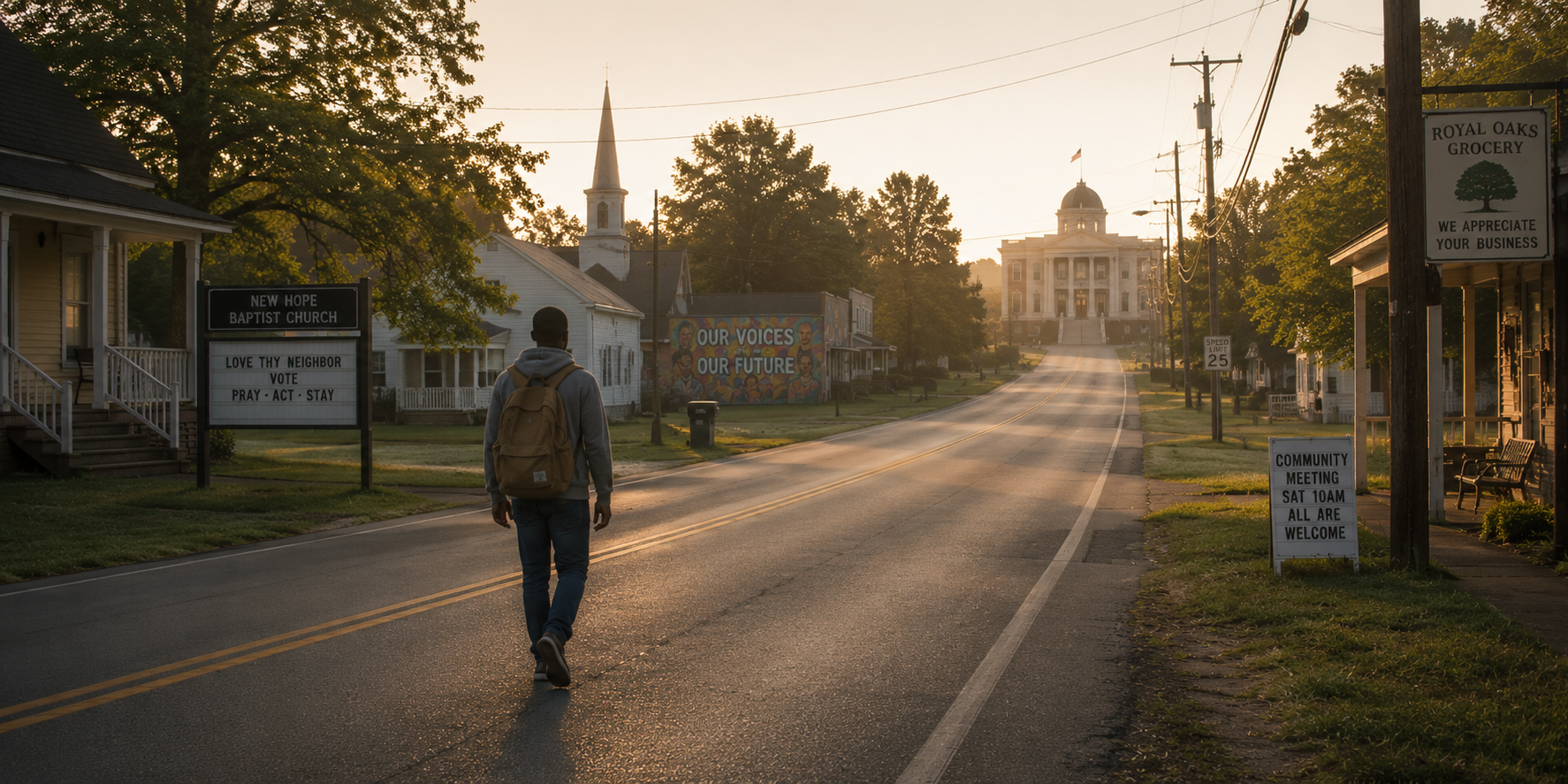
For some, democracy is encountered through a school that remains underfunded despite repeated promises of investment. For others, it is encountered through a district map that dilutes their political voice, a courthouse that appears inaccessible, a public official who never visits their neighborhood, or a community organization that successfully secures resources after years of advocacy. In each case, democracy is not being understood primarily through institutional design. It is being interpreted through experience. The distance between these two ways of understanding democracy produces what the ACMM Framework calls the Democratic Meaning Gap.
This gap is not simply a communications challenge. It is an interpretive challenge. It emerges when institutions assume that their definition of democracy is self-evident while communities are drawing upon entirely different sources to make sense of democratic life. The concept begins from a simple observation. People do not encounter democracy as neutral observers. They encounter it through culture, memory, identity, and power. Long before most people can describe democratic theory, they have already begun developing interpretations of what democracy means. They learn from family stories about voting. They learn from experiences with schools, courts, law enforcement, and public services. They learn from religious institutions, media ecosystems, community leaders, and local histories. Democracy arrives already embedded within a broader meaning-making environment. This reality helps explain a recurring tension within civic engagement work. Institutions often communicate about democracy as though they are introducing a concept. Communities frequently respond as though they are evaluating a relationship. One side speaks the language of systems and procedures. The other speaks the language of trust, fairness, belonging, recognition, and consequence.
The distinction matters because people are often described as disengaged when they are, in fact, engaged in interpretation. A community questioning whether elected officials represent their interests is making meaning of democracy. Young people debating whether political participation produces meaningful change are making meaning of democracy. Residents deciding whether institutions can be trusted to address local concerns are making meaning of democracy. These are not signs that democracy has disappeared from public life. They are evidence that democracy is being interpreted through lived reality rather than institutional language. The Democratic Meaning Gap also helps explain why information alone frequently fails to produce engagement. Much contemporary democratic practice is built on the assumption that increased knowledge will naturally lead to increased participation. If people understand how government works, they will become more civically involved. If they learn more about voting, they will vote. If they understand the stakes, they will act.
This is particularly visible in communities whose historical experiences have taught them to evaluate democratic promises cautiously. Historical memory matters because it shapes the lens through which contemporary events are interpreted. Communities that have experienced exclusion, disenfranchisement, neglect, or broken promises often develop democratic meanings that differ substantially from institutional narratives. These meanings are not irrational distortions. They are interpretations rooted in experience. The concept therefore challenges a common assumption within democracy work: that democratic institutions are the primary authors of democratic meaning. In reality, institutions are only one participant in a broader ecosystem of interpretation. Families, faith communities, cultural traditions, local leaders, social movements, media systems, and historical memories all contribute to how democracy is understood. Meaning is produced collectively long before it is measured institutionally.
Recognizing the Democratic Meaning Gap shifts the work of democracy from persuasion alone toward interpretation. The task is no longer simply convincing people that democracy matters. The task becomes understanding what democracy already means within a particular community and how those meanings were formed. This requires moving beyond questions of participation and toward questions of interpretation. It requires examining how culture, memory, identity, and power shape democratic understanding long before a voter enters a polling place or attends a civic meeting. The future of democratic practice may depend upon our ability to take meaning seriously. Communities are not waiting for institutions to tell them what democracy means. They are already making meaning of democracy every day. The challenge is whether democratic institutions are willing to recognize that reality and engage it with the same seriousness that they devote to turnout, trust, and participation.
The distance between how institutions understand and communicate democracy and how communities interpret democracy through their lived experiences, histories, identities, and relationships to power.
Why it appliesThe essay explicitly introduces and defines the democratic-meaning-gap as the core concept, explaining the distance between institutional and community interpretations of democracy. It elaborates on how this gap arises from differing sources of meaning-making: institutional procedures versus lived experience, culture, memory, identity, and power.
Concepts drawn from the Applied Cultural Meaning and Memory Framework™ (ACMM Framework™) knowledge base.
Hardy, A.. (2026, June 19). The Democratic Meaning Gap. The Meaning & Memory Lab, Applied Cultural Meaning and Memory Framework™ (ACMM Framework™). https://acmmframework.com/lab/the-democratic-meaning-gap
This essay is part of The Meaning & Memory Lab, the working journal of the Applied Cultural Meaning and Memory Framework™ (ACMM Framework™).
Continue reading · Essays
All essays →On Inherited Belonging
How Black Southern memory operates as political infrastructure and what movements miss when they treat it as backdrop.
Read →EssayMemory Is Not Background
Reframing collective memory as the operating system of contemporary political behavior.
Read →EssayThe Discipline of Patience
Long-horizon narrative work is not the absence of urgency, it is choosing whose clock to be urgent on.
Read →